Are you captivated by the unique charm of the world’s only nocturnal primate and ready to buy owl monkeys online? You have arrived at the right destination. At Exotic Pets Worldwide, we specialize in connecting responsible enthusiasts with ethically sourced, healthy owl monkeys.
Owl monkeys—also known as night monkeys or douroucoulis—are among the most distinctive primates available to dedicated exotic pet owners.
For those also interested in other small primates, we offer options to buy marmoset monkeys and tamarin monkeys, each with their own unique charms. However, the owl monkey stands apart as the only truly nocturnal monkey in the Americas, making it a remarkably special choice for the prepared owner
Why “Owl Monkeys” and “Night Monkeys”?
If you have searched for owl monkeys for sale or wondered where to buy owl monkeys, you are already looking at the same incredible animal. The owl monkey earns its name from its large, expressive eyes—an adaptation for nocturnal life—and its round, flat face, which resembles an owl. They are also widely called “night monkeys” because they are the only nocturnal monkeys in the New World.
Physical Characteristics of the Owl Monkey
Understanding the physical traits of the owl monkey is crucial for anyone preparing to get an owl monkey:
-
Size: Adults measure 24 to 37 cm (9.4 to 14.6 inches) in head and body length, with a tail measuring 31 to 40 cm (12.2 to 15.7 inches). The tail is not prehensile.
-
Weight: Adult owl monkeys weigh between 455 and 1,254 grams (1 to 2.8 pounds)—about the size of a small domestic cat.
-
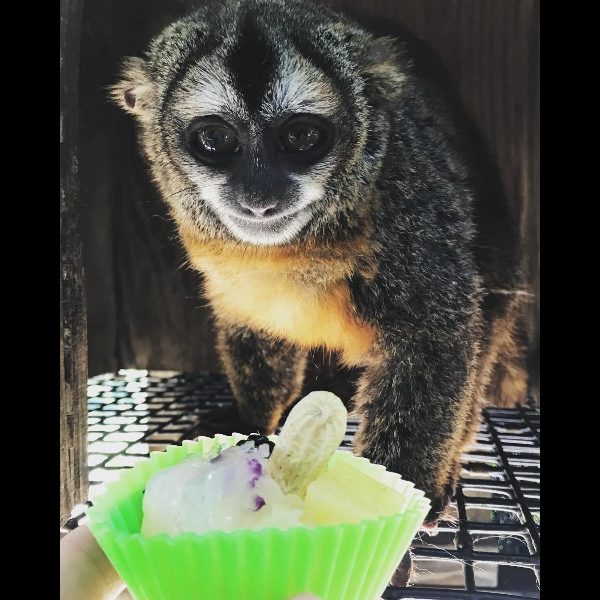
Appearance: Their coat is short, dense, and woolly, typically silvery gray on the back with yellow, buff, or orange-brown coloring on the underside. Their round face is marked with three dark lines—one on either side of the eyes and one down the middle of the forehead—giving them a distinctive, expressive appearance.
-
Lifespan: In the wild, the oldest known owl monkey reached 13 years; in captivity, with proper care, they can live up to 20 years.
Why Choose An Owl Monkeys
These are not low-maintenance pets; they are intelligent, social, and emotionally complex animals that require a dedicated, knowledgeable owner prepared for a very specific set of challenges.
The Only Nocturnal Monkey
Owl monkeys are the only nocturnal simian primates. This means they are naturally most active at night and sleep during the day. Their nocturnal nature makes them a unique option for those willing to accommodate their specific needs, but it also presents challenges—their active hours will likely conflict with a typical human schedule. They may become stressed or unhealthy if forced to adjust to a diurnal lifestyle.
Monogamous and Social Companions
Owl monkeys are known for their monogamous mating system, which is unusual among primates. They live in small family groups consisting of a mated pair and their offspring, with the male providing consistent and frequent care to the infants. They form strong pair bonds and remain with the same mate for life.
In captivity, they can become lonely and distressed if kept in isolation. It is essential to provide them with constant social interaction, whether that be with another owl monkey or a human caretaker who can meet their needs for companionship. Captive individuals kept alone become very distressed until they are placed with another individual. This makes social housing a critical aspect of their care.
Unique Communication
Owl monkeys have a wide range of vocalizations, using as many as 50 different kinds of calls. They communicate with squeaks, hisses, barks, and a distinctive alarm call described as a “wook”. Their throat sac can be inflated to add resonance to their calls. As pets, these vocalizations can be surprising or even disruptive, especially at night.
Exceptional Olfactory Senses
Owl monkeys rely extensively on olfactory cues for spatial navigation and communication. They use glands on their throat and at the base of their tail to mark their surroundings and practice “urine washing,” in which they coat their hands and feet with urine, transferring the scent to objects as they move about. This is a natural behavior that should be accommodated in captivity.
What to Consider Before You Buy Owl Monkeys Online
Legal and Ethical Responsibilities
It is your legal and ethical responsibility to research local, state, and federal laws regarding primate ownership. In many jurisdictions, it is illegal to own a monkey as a pet without a special permit, and in others, it may be entirely prohibited.
At Exotic Pets Worldwide, we are committed to ethical practices. All Aotus species are included in Appendix II of CITES (Convention on International Trade of Endangered Species), which regulates their trading and possession. We encourage you to source your pet from a reputable, conservation-minded breeder who prioritizes the animal’s welfare. We assist buyers with permit acquisition and provide complete health documentation.
The Long-Term Commitment
When you get an owl monkey, you are making a commitment that can last up to 20 years in captivity. This is a significant portion of your life dedicated to the well-being of another creature. Ensure you are ready for the financial, emotional, and time-based responsibilities before proceeding.
Health and Behavioral Considerations
Owl monkeys have complex care requirements that must be met for them to thrive:
-
Diet: Their diet in the wild consists mainly of fruit, leaves, flowers, insects, and small vertebrates. In captivity, this must be replicated with a balanced diet of fruits, vegetables, and protein sources. They are prone to metabolic bone disease if their nutritional needs aren’t adequately met.
-
Enclosure: They require a large, tall enclosure with permanent furniture including shelters, nesting boxes, climbing structures, platforms, ropes, and hammocks. Fresh vegetation is important for mimicking their natural habitat.
-
Temperature and Humidity: Owl monkeys are sensitive to temperature changes. They require a warm and stable environment, ideally between 21°C and 29°C (70°F to 85°F) with humidity between 40% and 70%.
-
Enrichment: A successful husbandry protocol must include a well-designed enrichment program using physical, social, nutritional, cognitive, and sensory enrichment categories. Puzzle feeders, hidden food, and fresh branches are particularly effective.
-
Veterinary Care: Finding a veterinarian who specializes in exotic primates is essential.